Launch offer — valid today only

📄 Digital book in PDF · read it on your phone or print it

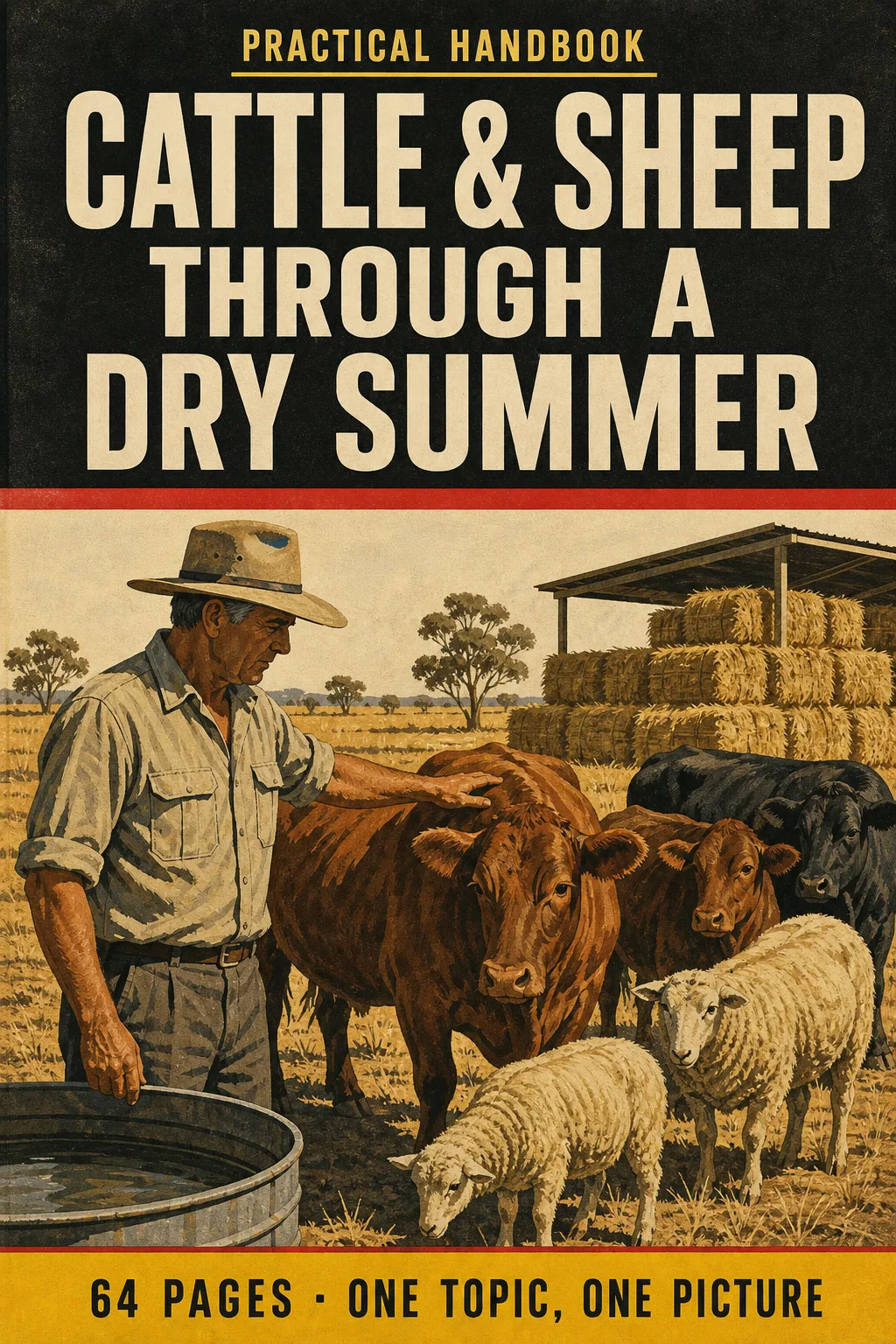
Cattle & Sheep Through a Dry Summer, in Drawings Every Decision in the Same Order

For cattle and sheep owners in summer-rainfall areas. The rain outlook, your own veld, how long your bales will last, body condition from 1 to 5, grazing, shade, licks, the animal that goes down and selling in time. One topic per page: first the drawing, then what you need to remember. 64 illustrated pages.

I WANT MY DRY-SUMMER PLAN

🔒 Secure checkout · PDF by email · 30-day guarantee
Every topic, its own pageEach dry-summer decision drawn, with the explanation beside it
64 illustrated pages9 parts, from the signs that cannot wait to next summer's plan
Up-to-date sourcesSAWS seasonal outlooks, Department of Agriculture drought advisories and ARC extension material
PDF by emailFormat

Look Inside the Book

Each page has a large drawing and a box with the numbers and steps you need to know:

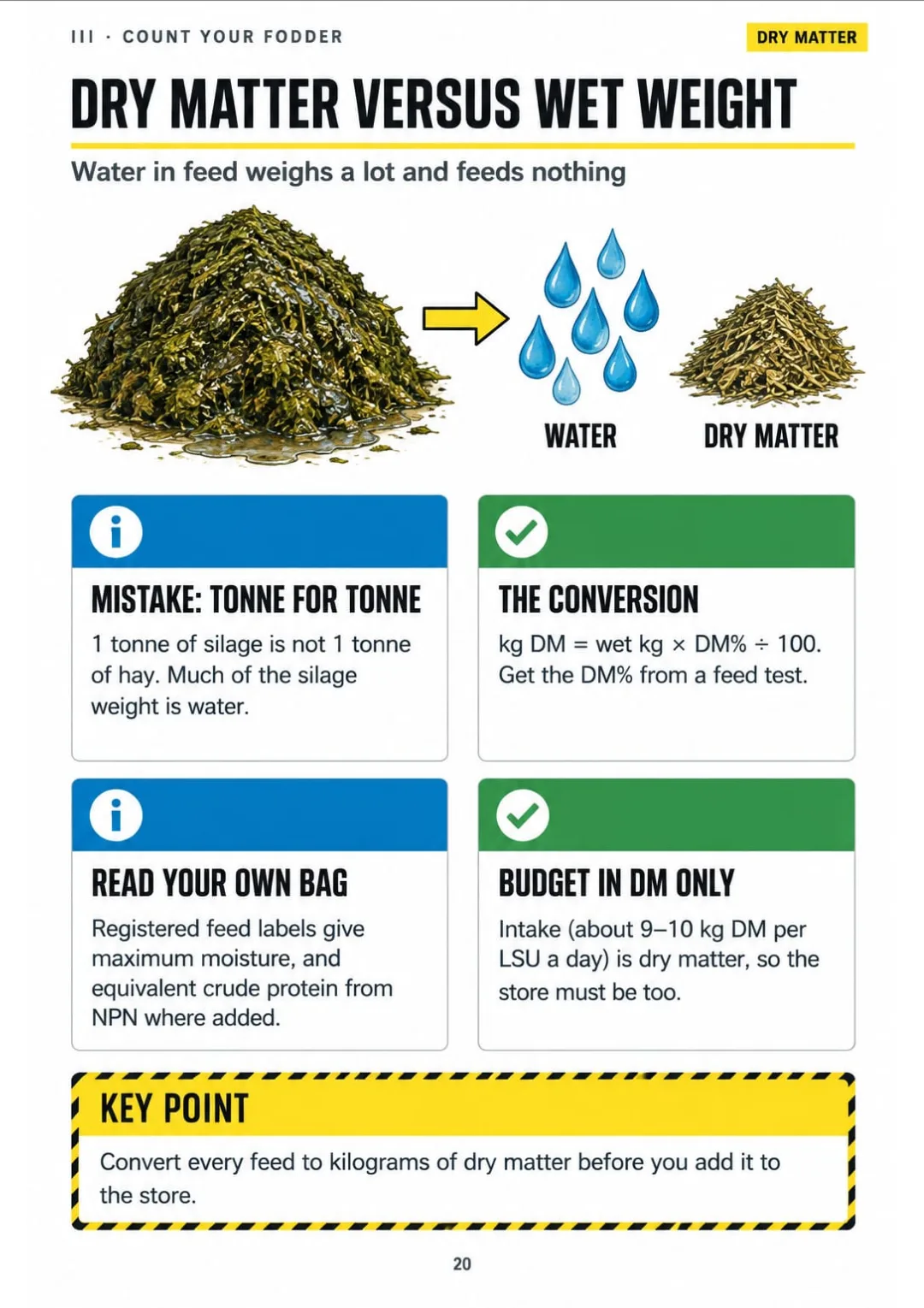
kg DM = wet kg × DM% ÷ 100 · budget only in dry matter
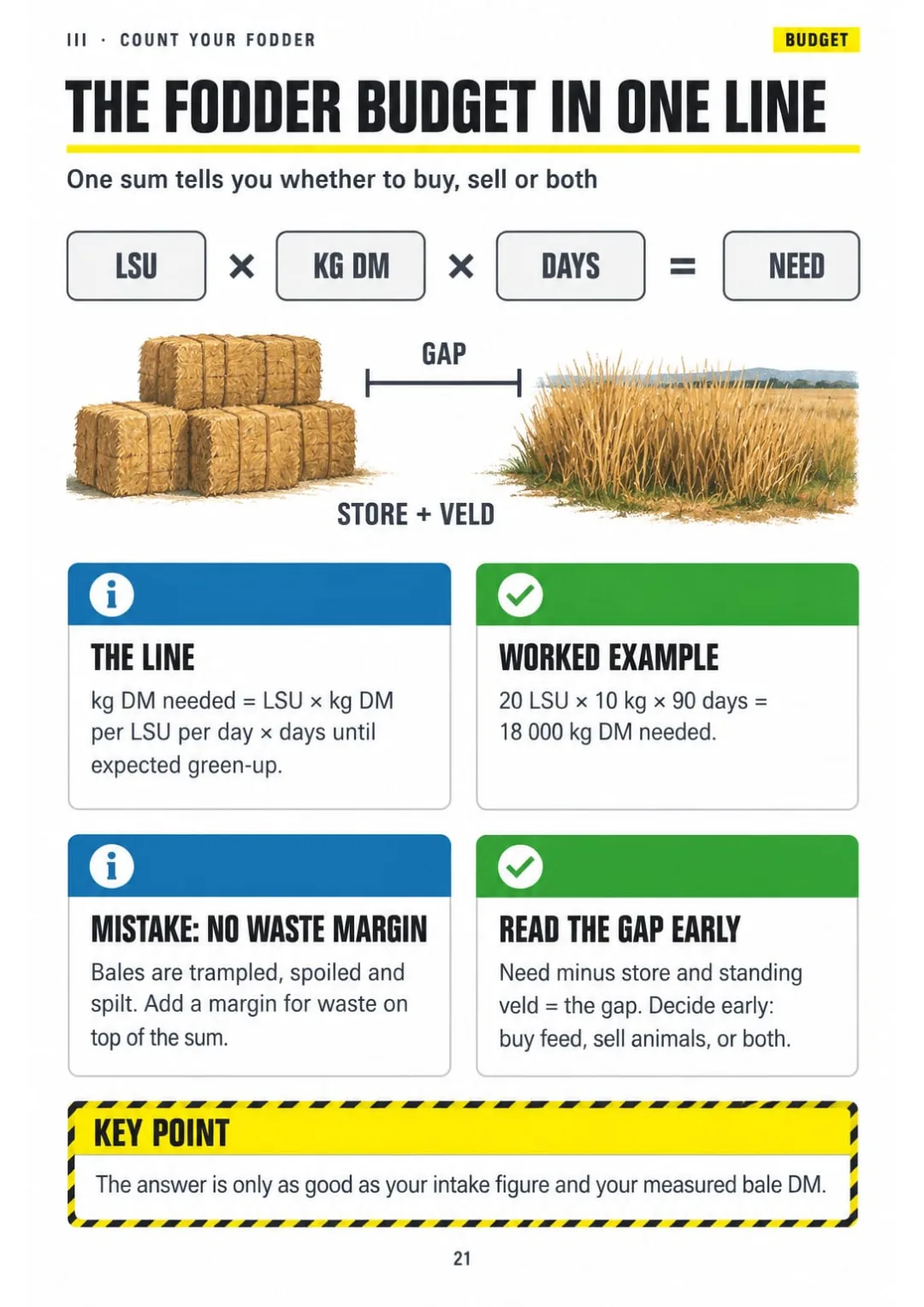
Need = LSU × kg DM a day × days to green-up
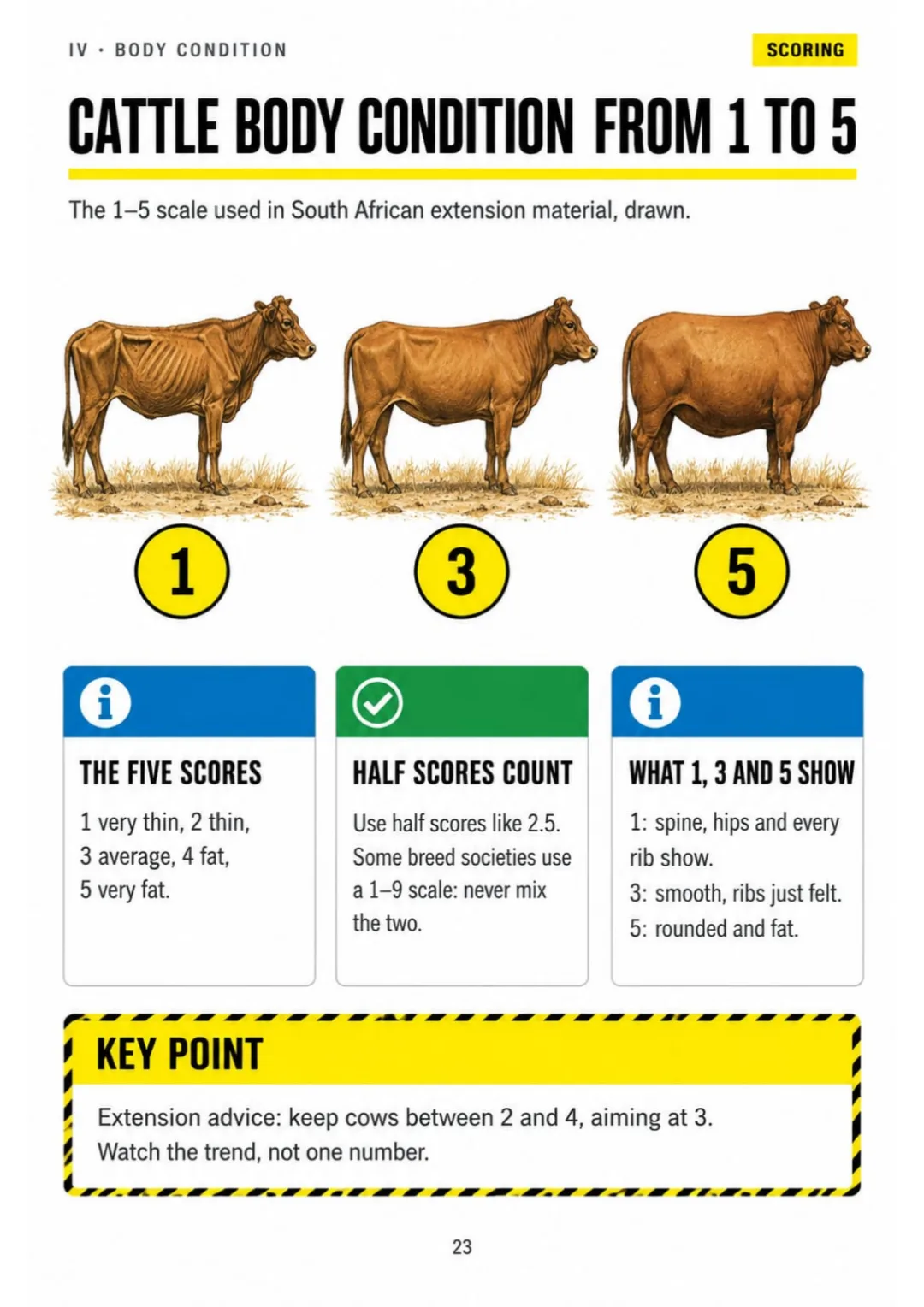
1 very thin · 2 thin · 3 average · 4 fat · 5 very fat, with half scores
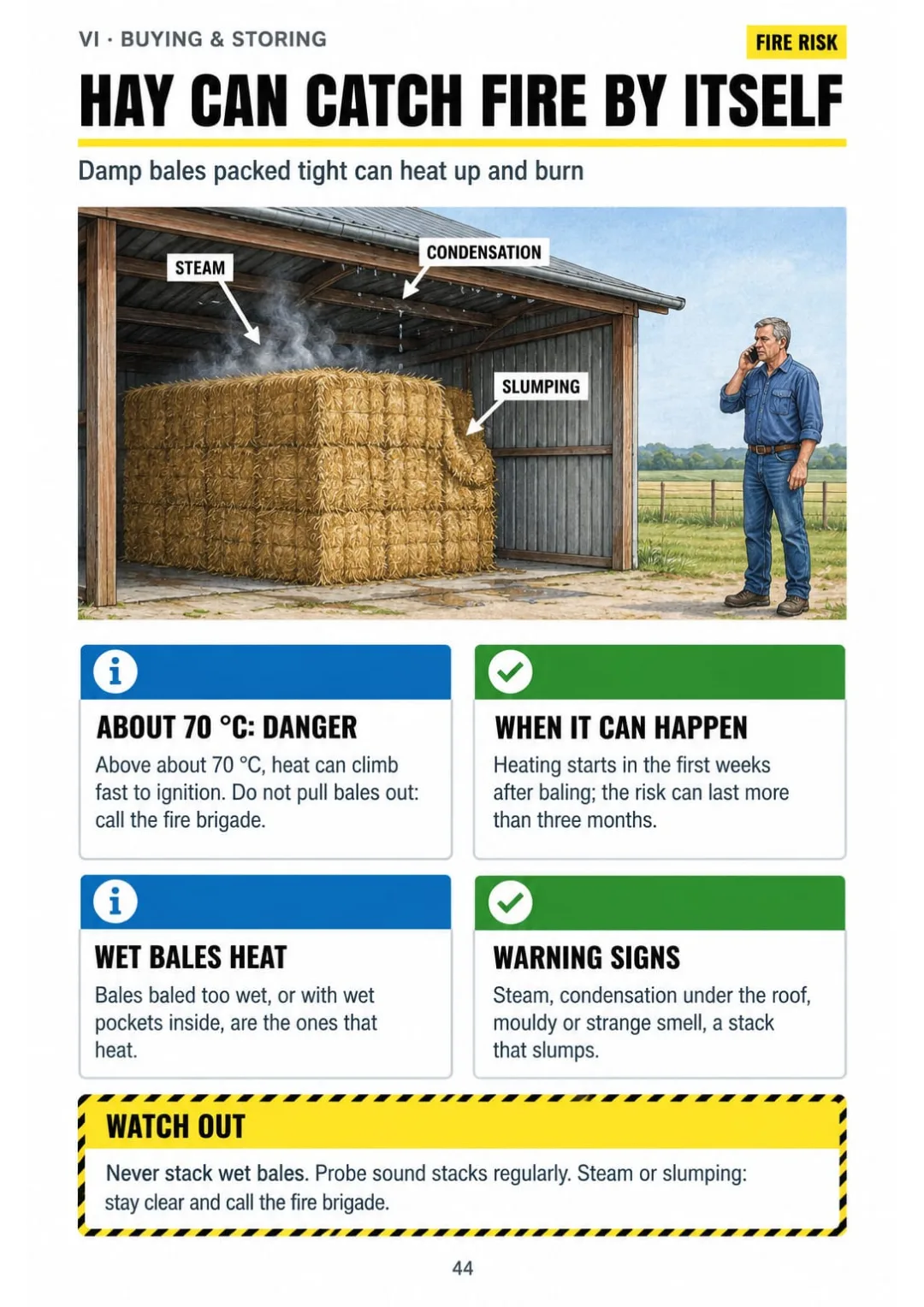
From about 70 °C inside a stack, heat can climb quickly to ignition.
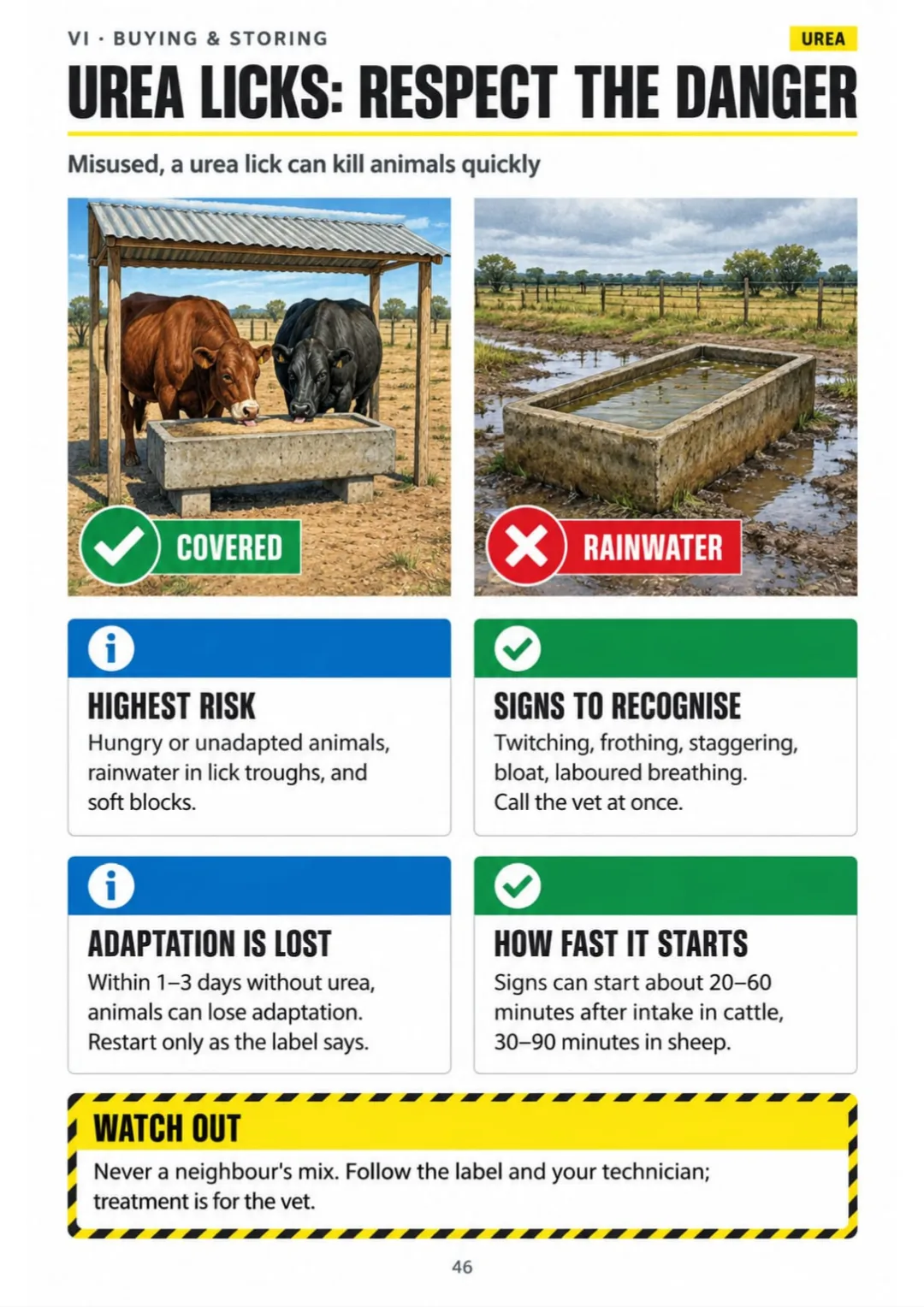
Urea poisoning signs can start 20–60 minutes after intake in cattle.
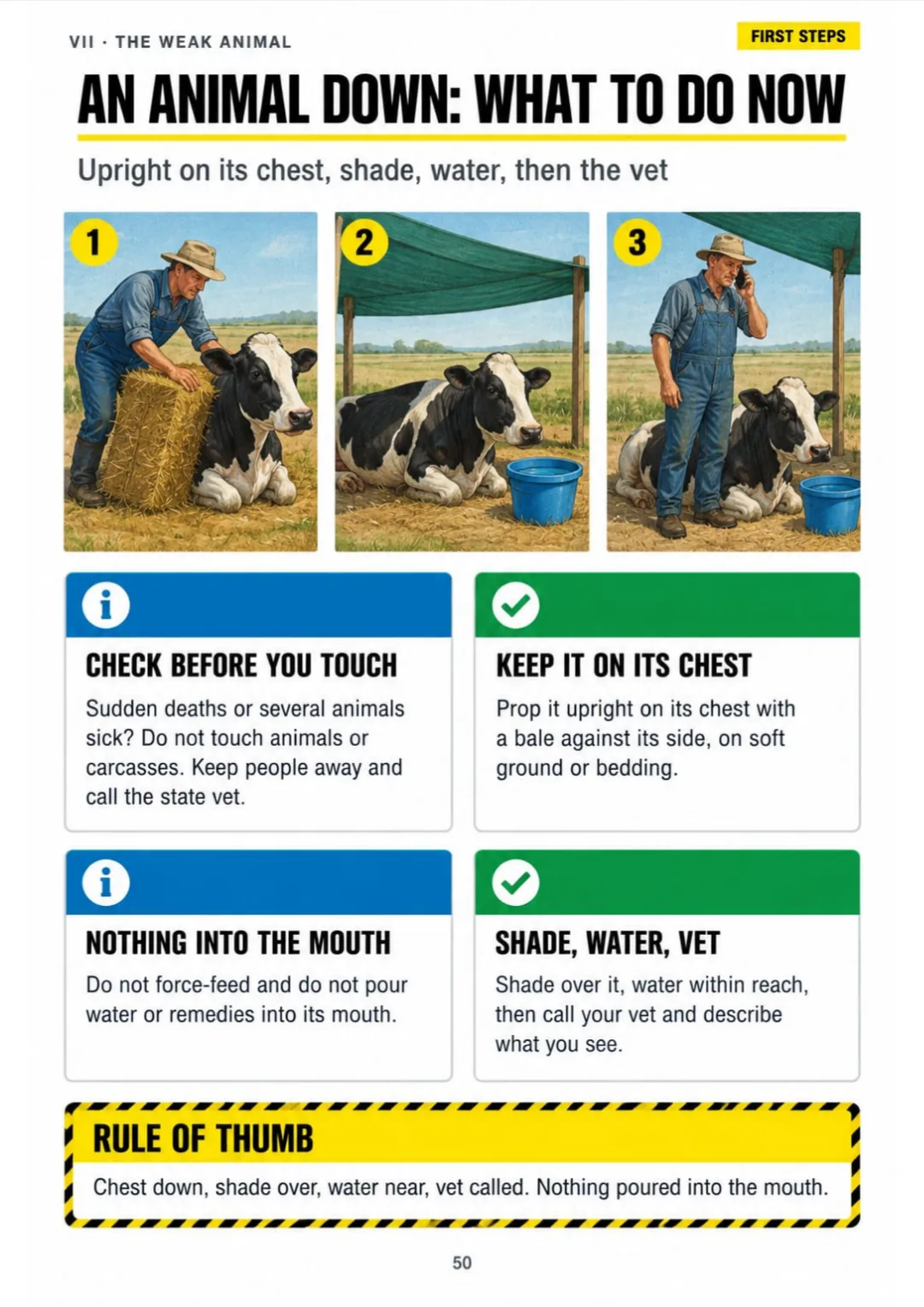
Animal down: keep it on its chest, shade and water within reach, call the vet, nothing into the mouth
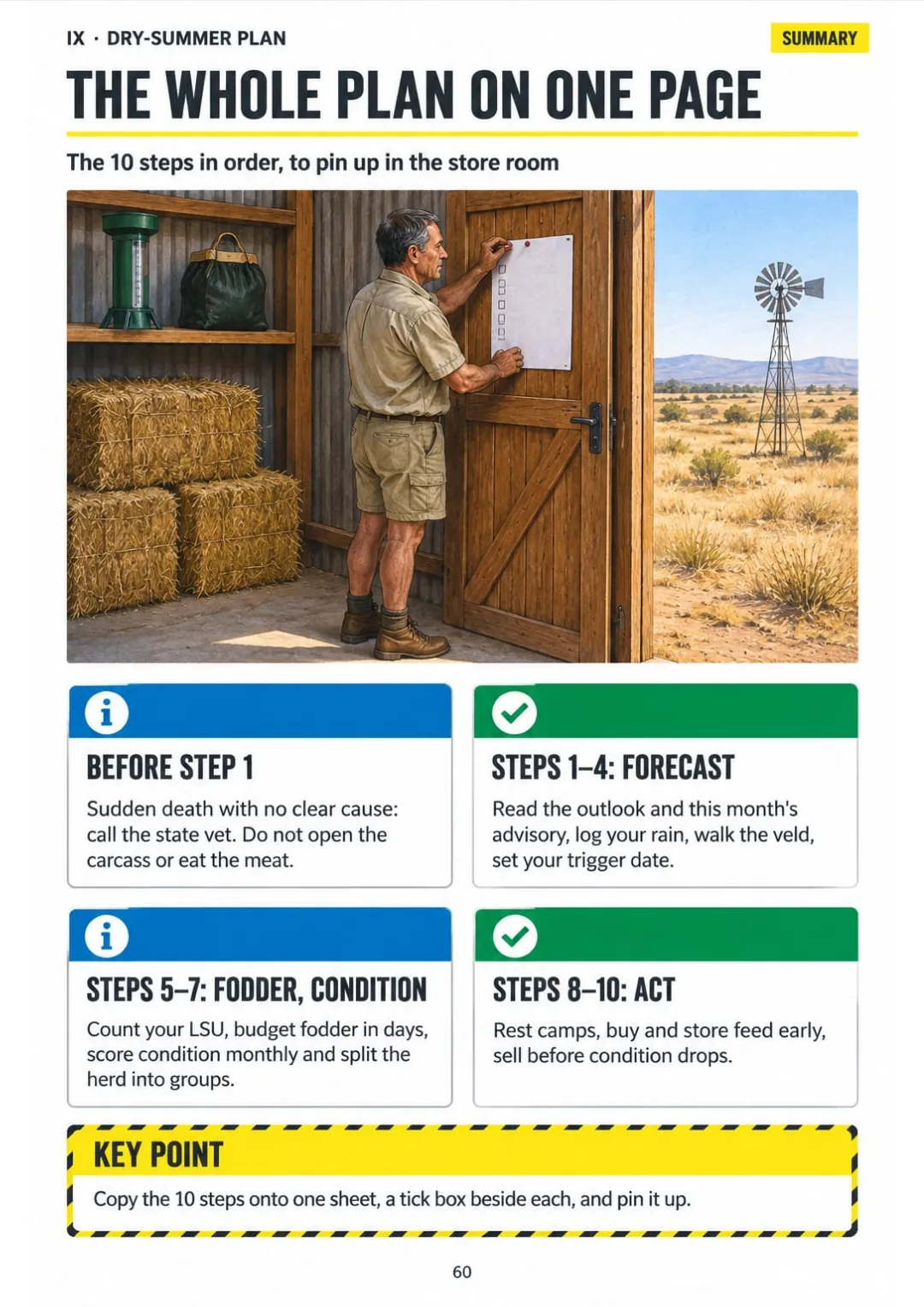
10 steps in order, with a box to tick, printed and pinned up
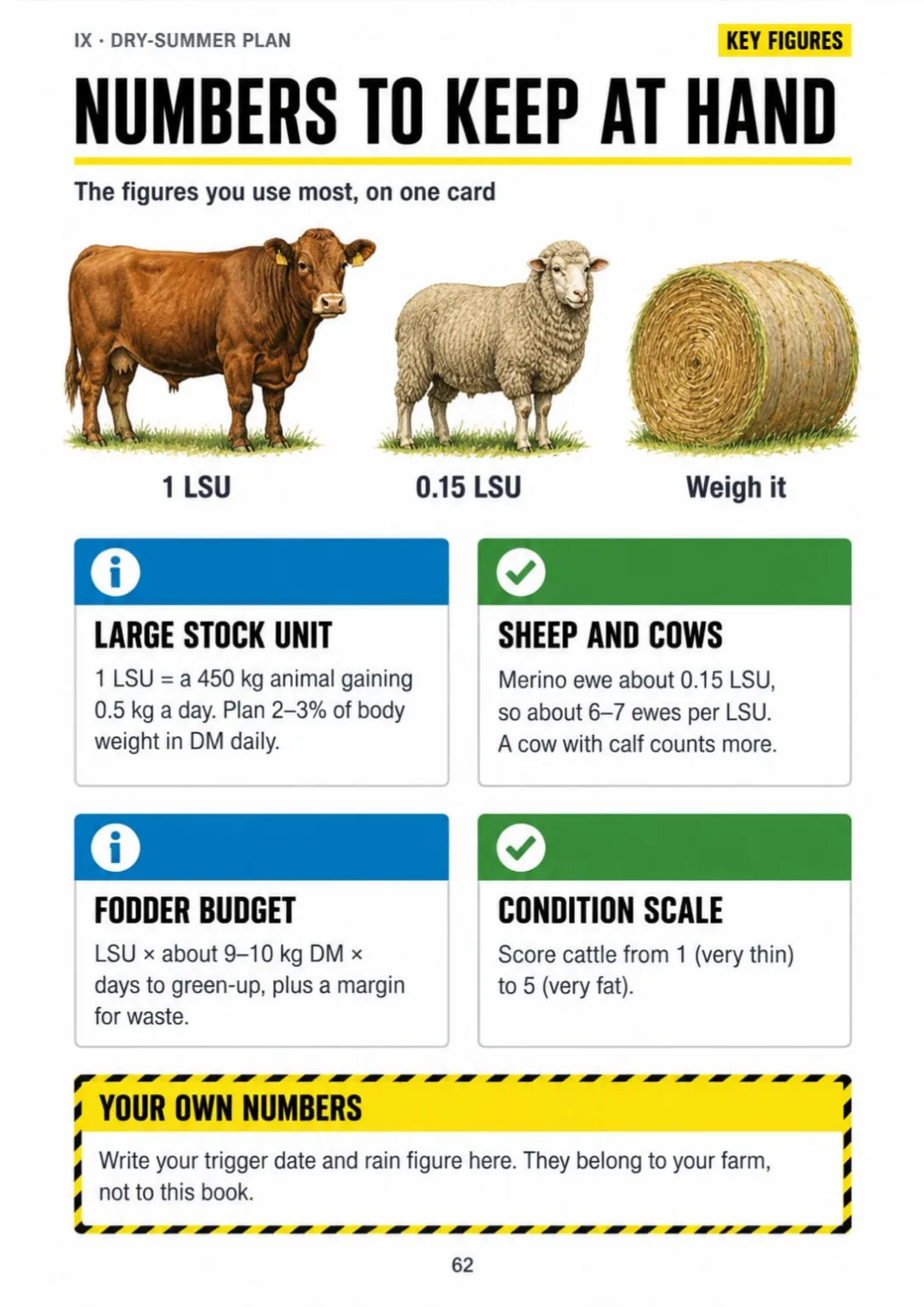
1 LSU = 450 kg · about 6–7 ewes per LSU · about 9–10 kg DM a day

Swipe to see more →

These are real pages from the book. The table of contents is the full one: 9 parts and 60 topics.

The Problem Isn't You. It's How It Was Explained.

You're at the kraal late in the afternoon, looking at a cow you've known for years. Is she a 3, or already a 2? You can't say for sure, and the rain still hasn't come.

The leaflet you kept explains condition scoring in long paragraphs: ribs, spine, hooks, pins, tailhead, fat cover. Lots of words and nothing to look at. Once you're standing next to the animal, the words are gone.

1 very thin · 2 thin · 3 average · 4 fat · 5 very fat, with half scores

In this book, the 1–5 scale has its own page. Cows at scores 1, 3 and 5 drawn side by side, with all five scores and the half scores explained in the boxes. The next page shows where to look.

The fodder budget in LSU, dry matter versus wet weight, urea licks, an animal down and choosing who to sell work the same way. Each one has its own page.

You score each animal the same way every month, write it down and see which cow is dropping. You decide in time, without going back to the leaflet.

COMPARE FOR YOURSELF

The Same Topic, Two Ways to Learn It

THIS
  • The leaflet: line after line
  • The fodder budget explained only in words
  • You reach the dry months still unsure
The fodder budget is calculated by determining the total feed requirement of the herd for the period remaining until the onset of active veld growth. The animals on the farm must first be converted to Large Stock Units, after which the daily dry matter intake per unit is multiplied by the total number of units and by the anticipated number of days to green-up. The resulting requirement, expressed on a dry matter basis, is subsequently compared with the quantity of fodder available.
FOR THIS
  • The fodder budget in one drawing
  • The formula and the numbers in a box
  • You see it and you get it
Need = LSU × kg DM a day × days to green-up
CONTENTS

Take a Look at the 9 Parts and 60 Topics

Before the first step, forecast and veld, counting your fodder, body condition and who comes first, grazing and shade, buying and storing fodder, the weak animal, selling and records, and your dry-summer plan: 64 pages, all illustrated

IBefore the First Step · pp. 5-8
  1. Read This First: Signs That Cannot Wait
  2. The Dry-Summer Order in 10 Steps
  3. Your Zone Changes the Timing
  4. Who to Call, Saved Before You Need It
IIForecast and Veld · pp. 9-15
  1. Reading the Seasonal Outlook
  2. The Monthly Drought Advisory
  3. Your Own Rain Gauge
  4. Walk Your Veld: Cover, Height, Bare Ground
  5. Green Is Not the Same as Feed
  6. Sourveld and Sweetveld
  7. Set Your Trigger Date in Advance
IIICount Your Fodder · pp. 16-22
  1. The Large Stock Unit (LSU)
  2. Count Your Animals in LSU
  3. How Much an Animal Eats in a Day
  4. Weigh a Few Bales, Never Guess
  5. Dry Matter Versus Wet Weight
  6. The Fodder Budget in One Line
  7. How Many Days Your Camps Can Give
IVBody Condition and Who Comes First · pp. 23-32
  1. Cattle Body Condition from 1 to 5
  2. Where to Look on a Cow
  3. Sheep: Feel, Do Not Just Look
  4. Score Every Month and Write It Down
  5. The Animal That Drops a Score
  6. Coat, Eyes and Dung: Other Signs
  7. Split the Herd into Groups
  8. Who Comes First: Pregnant, Lactating and Young
  9. Heifers and First-Calvers Need Extra Attention
  10. Teeth, Age and the Sale Group
VGrazing and Shade · pp. 33-39
  1. Never Graze a Camp Bare
  2. Rest Gives You Next Season
  3. Know Your Grazing Capacity
  4. Your Camp Grazing Record
  5. Shade and Heat Stress Signs
  6. Moving Animals in the Heat
  7. Plants They Normally Avoid
VIBuying, Storing and Crop Residues · pp. 40-48
  1. Buy Early, Not When Everyone Else Does
  2. Check a Bale Before You Pay
  3. Mould and Dust Are Not Feed
  4. Storing Bales the Right Way
  5. Hay Can Catch Fire by Itself
  6. Licks and Supplements: Read the Label First
  7. Urea and Licks: Respect the Danger
  8. Grazing Maize Residues After Harvest
  9. Drought-Stressed Sorghum and Crops
VIIThe Weak Animal · pp. 49-53
  1. Spot the Weak One Early
  2. An Animal Down: What to Do Now
  3. Bone Chewing and Botulism
  4. When to Call the Vet, Not Wait
  5. Dead Animals: Safe Disposal
VIIISelling, Weaning, Records and Theft · pp. 54-59
  1. Sell Before They Lose Condition
  2. Choosing Who to Sell
  3. Early Weaning Takes Pressure Off the Cow
  4. Marks: Brands and Tattoos
  5. Papers When Animals Move
  6. Count, Kraal and Report
IXYour Dry-Summer Plan · pp. 60-64
  1. The Whole Plan on One Page
  2. Monthly Farm Check
  3. Numbers to Keep at Hand
  4. The Most Frequent Dry-Summer Mistakes
  5. Next Summer Starts Now

One Page, One Topic, All Clear

Think of it this way:

It's early December, the camps are thinning and you need to know how many days your bales will really last.

You open the fodder budget page and see it in one line: LSU × kg of dry matter a day × days to green-up, with a drawn stack of bales and a patch of standing grass below it.

Urea poisoning signs can start 20–60 minutes after intake in cattle.

Body condition, urea licks, hay heating up in the stack, an animal down and selling before they lose condition work the same way: each one on its own page.

Cattle & Sheep Through a Dry Summer has 9 parts and 60 topics, all drawn, and it closes with the whole plan on one page, a monthly farm check and the numbers to keep at hand.

What you see drawn, you don't have to memorize.

What's Inside Cattle & Sheep Through a Dry Summer:

Ipp. 5-8

Before the First Step

The danger signs that cannot wait, the dry-summer order in 10 steps, how your zone changes the timing and who to call.

IIpp. 9-15

Forecast and Veld

The seasonal outlook, the monthly drought advisory, your own rain gauge, walking your veld, sourveld and sweetveld, and your trigger date.

IIIpp. 16-22

Count Your Fodder

The Large Stock Unit, counting your animals in LSU, daily intake, weighing bales, dry matter versus wet weight and the fodder budget in one line.

IVpp. 23-32

Body Condition and Who Comes First

Cattle condition from 1 to 5, where to look, feeling sheep, monthly scoring, splitting the herd and who comes first.

Vpp. 33-39

Grazing and Shade

Never grazing a camp bare, resting camps, grazing capacity, camp records, shade, heat stress and plants they normally avoid.

VIpp. 40-48

Buying, Storing and Crop Residues

Buying early, checking a bale, mould and dust, storing bales, hay that can catch fire, licks, urea and crop residues.

VIIpp. 49-53

The Weak Animal

Spotting the weak one early, an animal down, bone chewing and botulism, when to call the vet and safe disposal.

VIIIpp. 54-59

Selling, Weaning, Records and Theft

Selling before they lose condition, choosing who to sell, early weaning, brands and tattoos, papers for moving animals and reporting theft.

IXpp. 60-64

Your Dry-Summer Plan

The whole plan on one page, the monthly farm check, numbers to keep at hand, the most frequent mistakes and next summer.

At the end of the book: The whole plan on one page, a monthly farm check and the numbers to keep at hand.

Plus: 2 Free Books

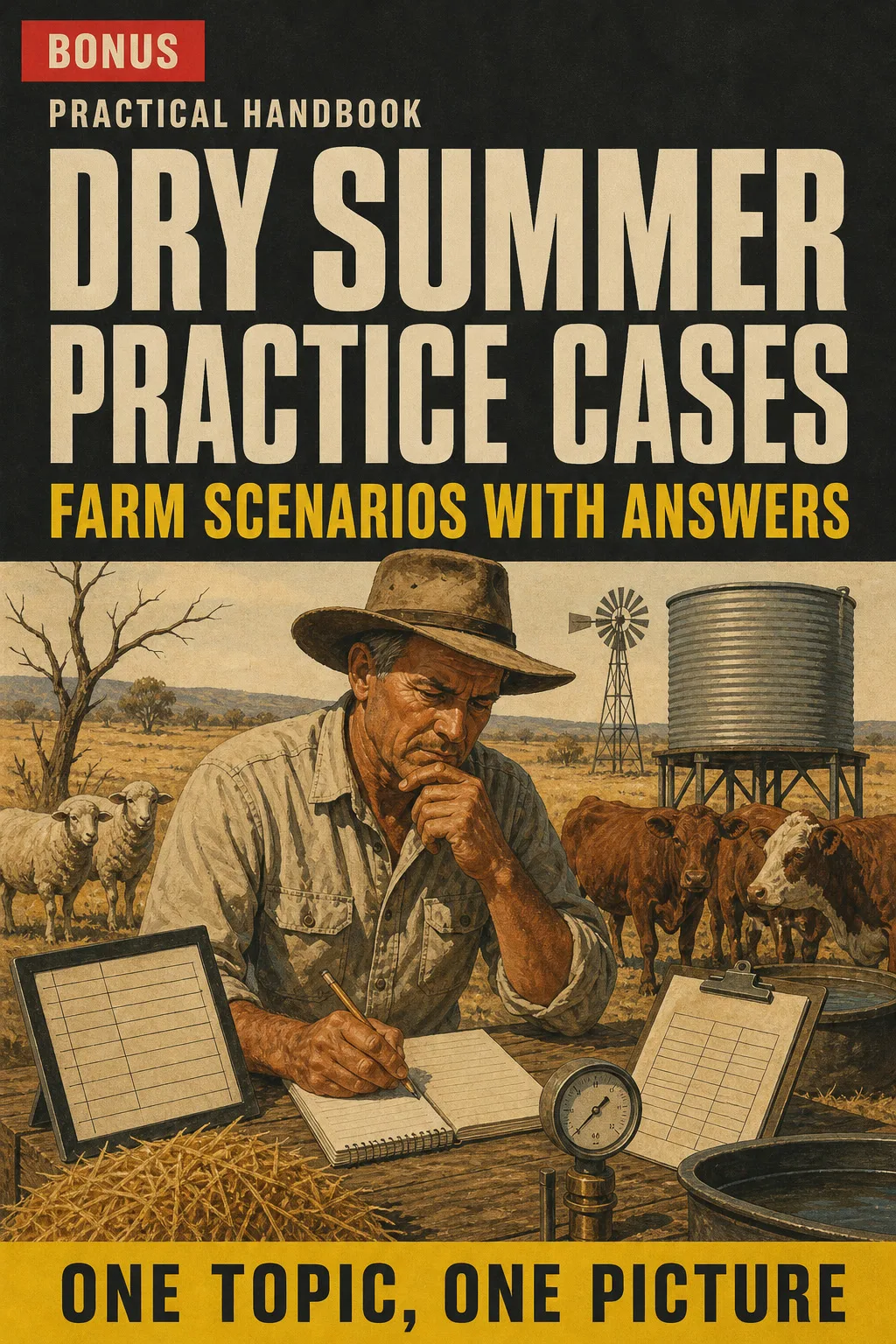
Dry Summer Practice Cases: Farm Scenarios with Answers

BONUS 1: «Dry Summer Practice Cases: Farm Scenarios with Answers»

Value on its own: US$ 17.90

Work through real farm situations, like a cow losing condition, a fodder stack running low or a dry forecast, and check your decision against the answer page.

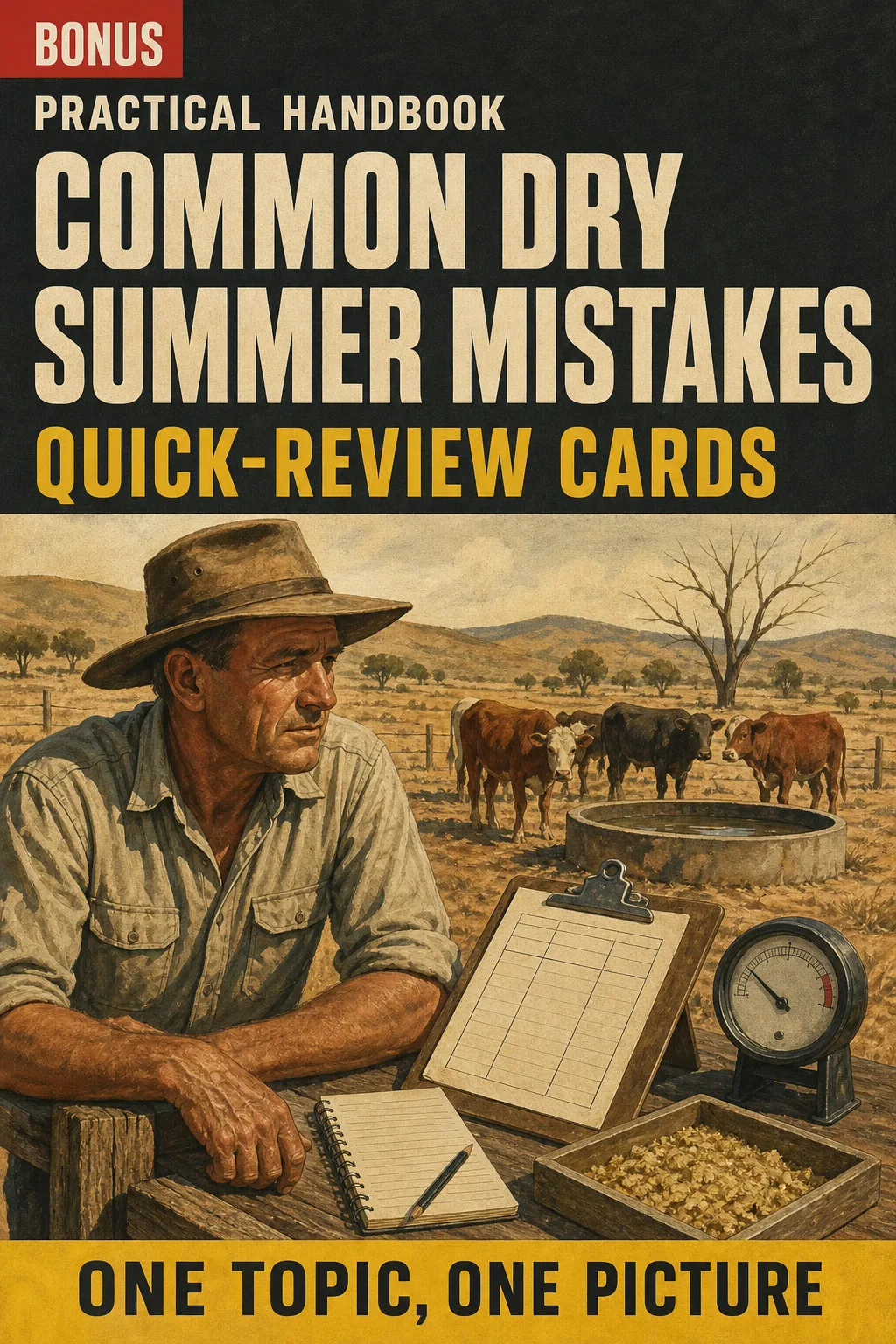
Common Dry Summer Mistakes: Quick-Review Cards

BONUS 2: «Common Dry Summer Mistakes: Quick-Review Cards»

Value on its own: US$ 14.90

The most frequent mistakes, like waiting too long to sell, grazing the best camp bare or feeding without reading the label, on cards you can print and pin up in the store room.

Cattle & Sheep Through a Dry Summer with 2 Free Books

  • Cattle & Sheep Through a Dry Summer: 64 illustrated pagesUS$ 63
  • BONUS 1: Dry Summer Practice Cases: Farm Scenarios with AnswersUS$ 17.90
  • BONUS 2: Common Dry Summer Mistakes: Quick-Review CardsUS$ 14.90
  • High-resolution PDF to printIncluded
Total value US$ 95.80
YOUR PRICE:
US$ 27
You save US$ 68.80
YES, I WANT CATTLE & SHEEP THROUGH A DRY SUMMER FOR US$ 27

📄 This is a digital PDF book sent to your email: nothing is printed or shipped.

Secure purchaseEncrypted payment30-day guarantee

PDF by email: We email you Cattle & Sheep Through a Dry Summer as a PDF, together with the two free books. It's a single payment: no installments, no extra charges.

Who This Book Is For

You're planning before the rain

You're planning before the rain

You set your trigger date, count your animals in LSU and know how much fodder you need before the season turns.

The rain is late and the camps are thin

The rain is late and the camps are thin

You go through the order step by step: fodder left, body condition, who comes first and who to get ready to sell.

You farm part-time from town

You farm part-time from town

You print the monthly farm check and the whole plan, so every weekend visit follows the same order, even when a family member checks for you.

Everything You Get Today

US$ 95.80US$ 27
YES, I WANT CATTLE & SHEEP THROUGH A DRY SUMMER FOR US$ 27

📄 This is a digital PDF book sent to your email: nothing is printed or shipped.

30DAYS
GUARANTEE

30-Day Guarantee

Try Cattle & Sheep Through a Dry Summer for 30 days, bonus books included.

We refund everything if the file won't open, if the book isn't what you see here, if you were charged twice or if the email doesn't arrive. Just email us.

You pay once. No subscriptions.

Frequently Asked Questions

Is it for me if I keep a few cattle and sheep on communal land or a small farm?

Yes. It's written for small-scale owners with 10 to 40 cattle and a small flock, including people who farm part-time. It's built for summer-rainfall areas: one page shows how sourveld and sweetveld change the timing, and you set your own trigger date from your rain gauge and your own veld. It doesn't give one calendar for the whole country.

Where does the content come from?

From public South African guidance: SAWS seasonal outlooks, the monthly drought advisories published by the Department of Agriculture, ARC and provincial extension material, and the relevant Acts on animal identification, stock theft and feed registration.

Is it official material?

No. It's an independent illustrated guide. The organisations are named only to show where the information comes from.

Does it replace my vet or animal health technician?

No. It's educational material. It gives no rations, doses, mixes or treatments: for licks, it sends you to the registered label and to your vet or technician.

I've kept animals for years. Is this for beginners?

No. It assumes you already know your animals. What it adds is the order: when to start counting fodder, how to score condition the same way every month, and who to sell first, with the numbers on one page. The farm scenarios in the bonus book are written for this book, with an answer page to check your decisions.

When and how does it arrive?

As a PDF by email, sent to the address you enter at checkout.

Do I have to pay every month?

No. It's a single payment, with no subscription.

Can I have it on paper?

Yes. You can print the PDF at home or at a print shop and keep it in the store room.

How does the refund work?

You have 30 days. We refund everything if the file won't open, if the book isn't what you see on this page, if you were charged twice or if the email doesn't arrive: just email us.

Before You Close This Page

No more rereading leaflets that don't stick.

You see body condition drawn, and you know.

You go into the dry months knowing where everything is.

Drawings make studying faster.

The book is right below.

One-time payment: US$ 27 · Guarantee: 30 days · PDF by email

YES, I WANT CATTLE & SHEEP THROUGH A DRY SUMMER FOR US$ 27

📄 This is a digital PDF book sent to your email: nothing is printed or shipped.